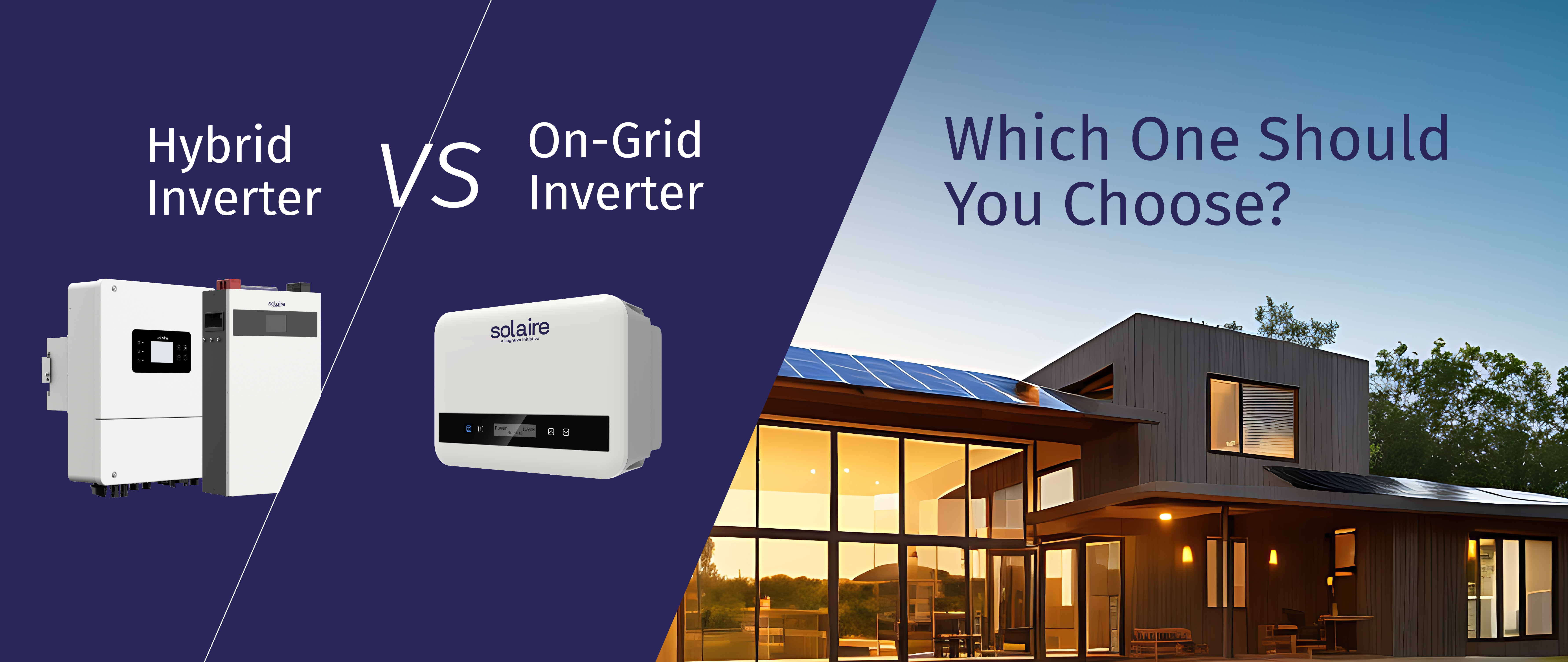
Hybrid Inverter vs On-Grid Inverter: Which One Should You Choose?
If you’re planning a solar installation, one of the biggest decisions you’ll make is choosing between a hybrid inverter and a grid-tied inverter. Both are effective solar power solutions, but the right choice depends on how you use electricity, whether you need battery backup, and what kind of long-term flexibility you want from your system. At Solaire, we work with homes and businesses that want more than just lower power bills. Some want simple grid-connected savings, while others want energy resilience during outages. That is why it helps to understand what each inverter does before you decide. You can explore Solaire’s range of on-grid and hybrid solar products to see how both categories are positioned for residential and commercial applications. A grid-tied inverter, also known as an on-grid inverter, connects your solar system directly to the utility grid and converts DC power from solar panels into AC power for your home or business. It also allows surplus energy to be exported to the grid, often supporting net metering and helping reduce your electricity bill. The biggest advantage of a grid-tied inverter is cost-effectiveness. Because it does not require batteries, the system is usually more affordable upfront, simpler to maintain, and easier to scale over time. Solaire’s on-grid positioning also highlights reliable grid compliance, wide MPPT ranges, and stable operation for both residential and commercial rooftops. That said, a grid-tied inverter depends on the grid to function. During a power cut, it typically shuts down and cannot continue supplying electricity to your property, which means there is no built-in battery backup. If your priority is reducing bills through solar generation and exporting excess power, a Solaire on-grid solution may be the more straightforward choice. A hybrid inverter combines solar generation, battery storage, and grid interaction in one integrated system. According to Solaire’s product positioning, it is designed to optimise on-grid performance while also providing backup during outages, intelligent export control, and more advanced energy management. This makes the hybrid inverter a more flexible option for users who want both savings and reliability. Instead of sending all surplus solar energy to the grid, the system can store some of it in batteries and use it later when solar production drops or when the grid goes down. For homes with frequent outages, or SMEs that cannot afford interruptions in billing, refrigeration, internet connectivity, or customer service, the value of battery backup can be significant. Solaire’s brand messaging around hybrid systems also emphasizes backup continuity and smarter energy usage, especially for modern residential and commercial installations. You can review Solaire’s broader solar inverter and storage portfolio to see how these solar power solutions fit into different energy needs. When comparing a hybrid inverter and a grid-tied inverter, the first difference is backup capability. A grid-tied inverter is built mainly for solar generation and bill reduction, while a hybrid inverter adds battery backup and energy storage into the system design. The second difference is upfront investment. A grid-tied inverter system is generally lower in cost because it does not include batteries, whereas a hybrid inverter setup costs more because it adds storage and more advanced controls. The third difference is flexibility. A hybrid inverter gives you more control over when solar energy is used, stored, or exported, while a grid-tied inverter focuses on direct solar usage and grid export. For customers thinking long term, hybrid systems can offer a more future-ready path, especially if energy reliability is becoming as important as energy savings. For many homeowners, a grid-tied inverter is a smart choice when the main goal is to reduce monthly electricity bills and make use of net metering. It is especially suitable in areas with a stable grid, where outages are rare and battery storage is not a priority. On the other hand, a hybrid inverter is better suited for homeowners who want uninterrupted power for essentials like fans, lights, Wi-Fi, refrigeration, home office equipment, or security systems. In these situations, battery backup becomes more than a convenience, it becomes part of the home’s daily reliability plan. If your household wants both lower bills and resilience during outages, a hybrid inverter may justify the extra upfront cost. If your grid supply is dependable and your focus is payback, a grid-tied inverter may be the cleaner and simpler option. For SMEs, the decision often comes down to the cost of downtime. Shops, clinics, cafés, offices, and service businesses may lose productivity, sales, or customer trust when the power goes out, so battery backup can directly support business continuity. In that context, a hybrid inverter is often the stronger option because it combines solar savings with backup protection. It is particularly relevant where billing systems, refrigeration, routers, computers, or customer-facing services need to keep running without interruption. A grid-tied inverter still works well for SMEs that mainly want to cut daytime power costs and operate in locations with reliable utility supply. For such businesses, it remains one of the most cost-effective solar power solutions, especially when system simplicity and lower capex are the main priorities. We would recommend a grid-tied inverter if your priority is lower upfront cost, easy maintenance, and maximum return from daytime solar generation. It is the right fit when the grid is dependable and you do not need battery backup. We would recommend a hybrid inverter if you want more control, better resilience, and the ability to keep essential loads running during outages. It is a stronger fit for homes and businesses that see power reliability as part of overall energy planning, not just a backup feature. Solaire’s own product lineup supports both paths, from efficient on-grid systems for straightforward bill savings to hybrid systems that combine solar, storage, and smart energy management. If you’re evaluating which of these solar power solutions suits your property best, the next logical step is to contact Solaire with your load profile and usage goals. Choosing between a hybrid inverter and an on-grid inverter is not really about which one is universally better. It is about whether your priority is lower cost, higher energy independence, stronger battery backup, or a more flexible solar setup for the future. For homeowners and SMEs alike, the best decision comes from matching the inverter type to your outage pattern, budget, and daily electricity use. When that alignment is right, both systems can become highly effective solar power solutions.Hybrid Inverter vs On-Grid Inverter: Which One Should You Choose?
What is a grid-tied inverter?
What is a hybrid inverter?
Hybrid inverter vs grid-tied inverter: key differences
Which one works better for homeowners?
Which one works better for SMEs?
How to choose between the two?
Making the right decision