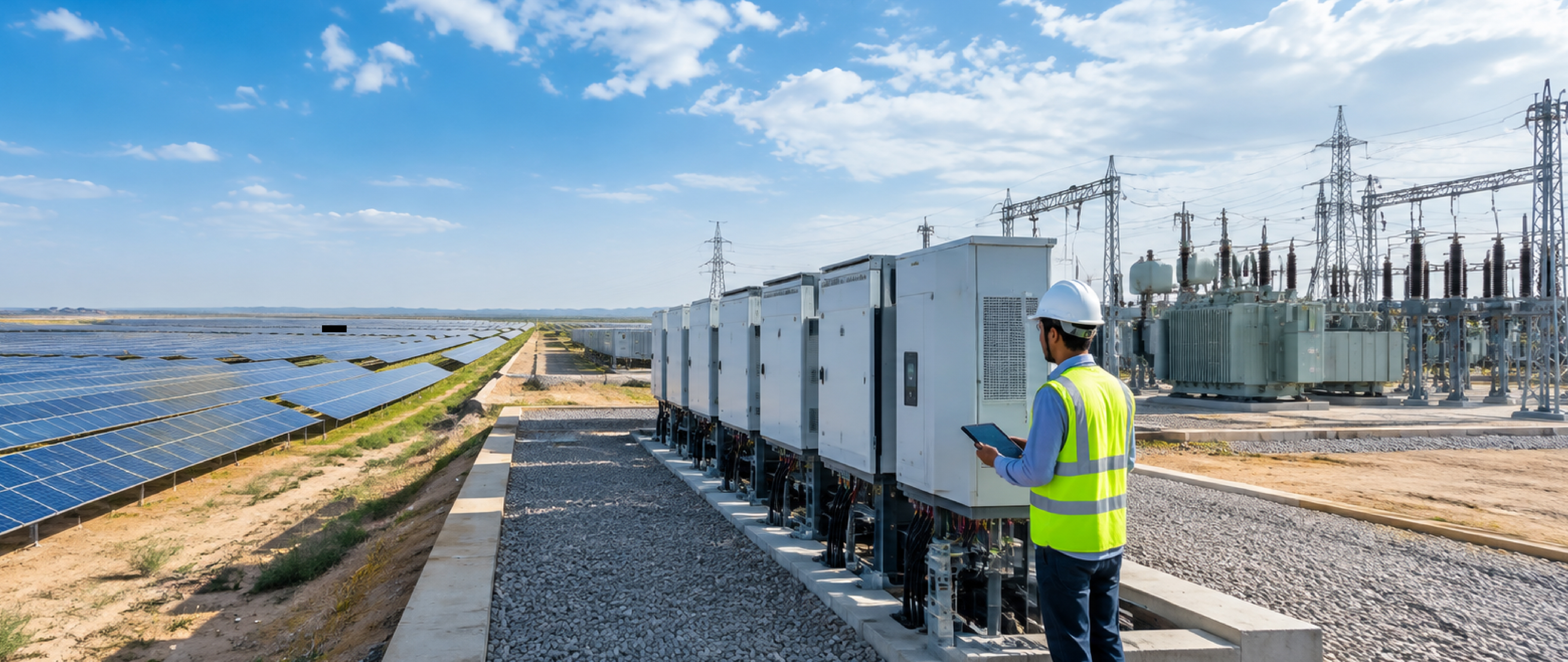
How Solar Inverters Support Grid Stability and Power Quality
How Solar Inverters Support Grid Stability and Power Quality
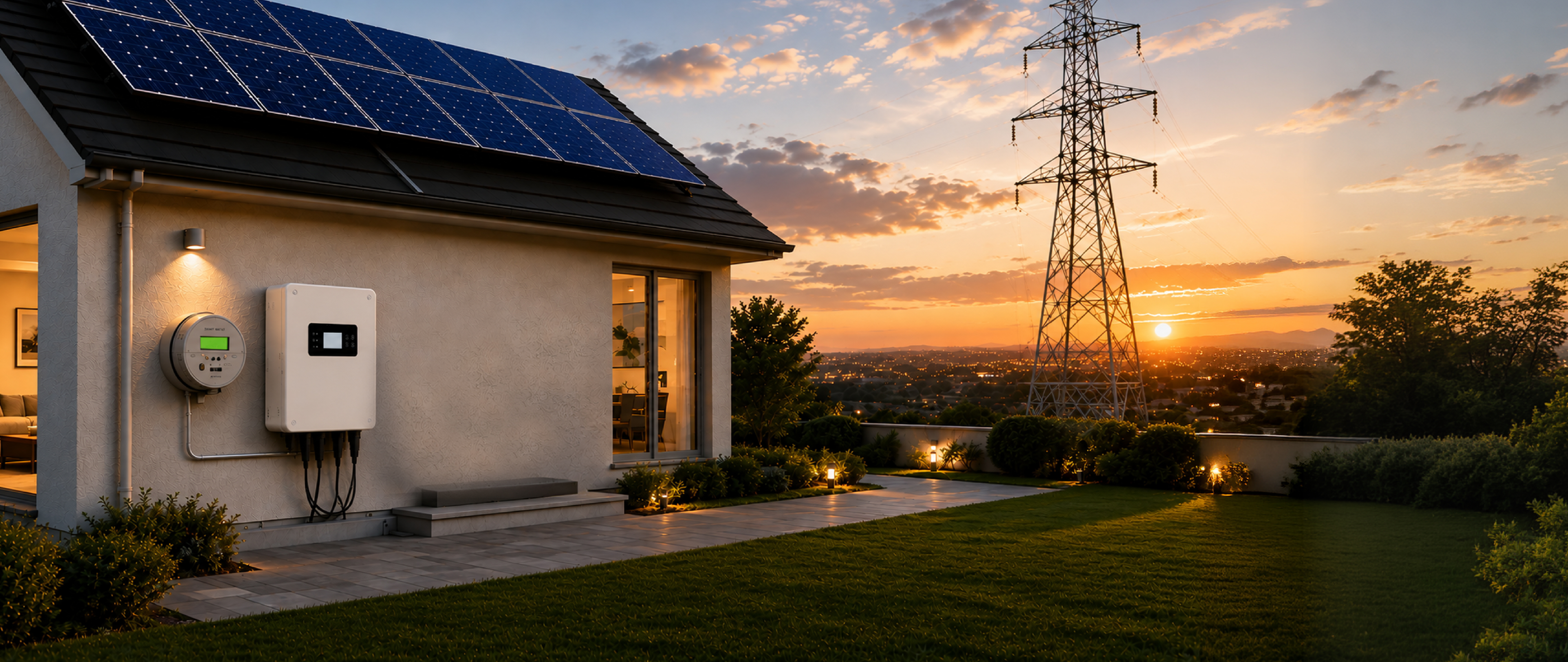
Solar inverters do much more than convert DC electricity from panels into usable AC power. In modern grid-connected systems, they can also help support voltage, manage reactive power, respond to grid disturbances, and protect overall power quality.
This role is becoming more important as solar capacity grows across India. A well-designed inverter does not simply inject solar electricity into the grid; it helps ensure that the electricity is delivered safely, predictably, and in a way that supports the wider network.
From power conversion to grid support
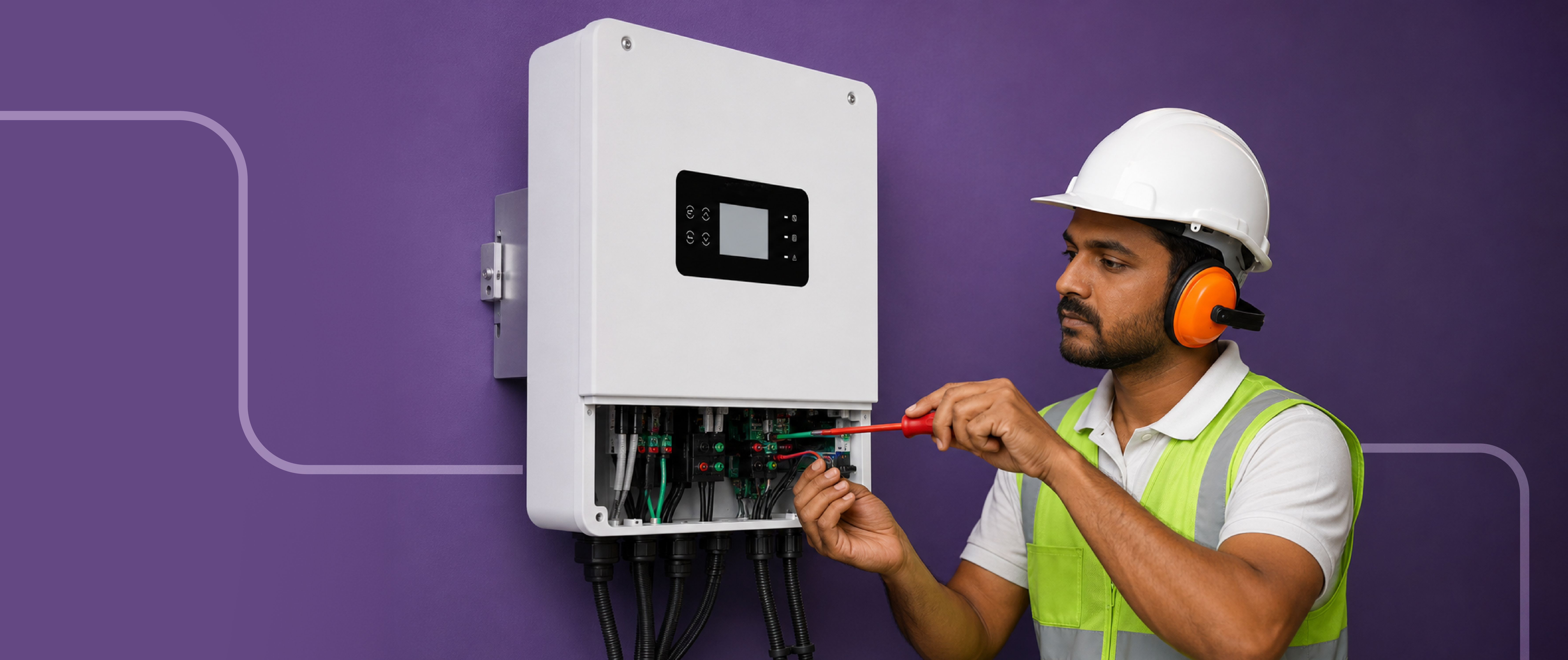
At its most basic level, a solar inverter converts DC power from solar panels into AC power for homes, businesses, or the electricity grid.
But a grid-connected inverter also has to synchronise its output with the grid's voltage, frequency, and waveform. If the grid changes unexpectedly, because of a sudden load increase, voltage dip, frequency variation, or network disturbance, the inverter needs to respond within its operating limits.
This is where grid support becomes important. Modern inverters can monitor grid conditions continuously and adjust their behaviour to help maintain stable operation instead of acting only as simple power-conversion equipment.
Solaire's utility-scale inverter guidance highlights functions such as reactive-power support, frequency response, ramp-rate control, voltage ride-through, and grid-code compliance for large solar plants.
What is reactive power?
Electricity systems use two broad forms of power:
- Active power, measured in kW or MW, performs useful work such as running lights, motors, appliances, and machines.
- Reactive power, measured in kVAR or MVAR, helps maintain voltage levels so electrical equipment and the network can operate correctly.
Reactive power does not directly run a fan or charge a phone. Instead, it supports the magnetic and electric fields required by equipment such as motors, transformers, air-conditioners, and industrial machinery.
A simple way to think about it is this: active power does the work, while reactive power helps create the stable electrical conditions needed for that work to happen effectively.
The Central Electricity Authority defines reactive power in relation to AC voltage, current, and the phase angle between them, measured in volt-amperes reactive.
Why voltage support matters
Grid voltage is influenced by demand, power flow, network impedance, transformer loading, and local generation. If voltage drops too low, motors can struggle, lights may dim, and sensitive equipment may malfunction. If voltage rises too high, equipment protection systems may operate or the inverter may disconnect to protect itself and the grid.
A modern inverter can provide reactive power support by injecting or absorbing reactive current within its technical capability. This helps manage voltage at the connection point.
For example:
- If local voltage is too low, the inverter may inject reactive power to support voltage recovery.
- If local voltage is too high, the inverter may absorb reactive power where its control settings and grid requirements allow it.
This capability is especially important for larger solar plants, commercial installations, and solar projects connected to weaker parts of the distribution or transmission network.
Power factor and inverter performance
Power factor is a measure of how effectively electrical power is being used. A power factor closer to 1.0 generally indicates that active power and apparent power are being used efficiently.
Grid standards require generating stations to maintain appropriate power-factor performance. CEA connectivity regulations specify dynamically varying reactive-power capability to maintain power factor within the range of 0.95 lagging to 0.95 leading, subject to applicable conditions and system size.
For solar developers and commercial consumers, this means inverter selection is not only about kW capacity. It is also about whether the inverter can meet the applicable grid support requirements at the point of connection.
How inverters protect power quality
Power quality describes how stable and clean the electrical supply is. Good power quality means voltage, frequency, waveform, and other electrical characteristics remain within acceptable limits.
Solar inverters contribute to power quality by helping manage several issues:
- Harmonic distortion
- DC-current injection
- Voltage flicker
- Frequency variation
- Voltage rise or voltage sag
- Unsafe grid export during outages
- Sudden changes in generation output
CEA regulations set technical limits for distributed generation. For example, grid-connected distributed resources must not inject DC current greater than 0.5% of full-rated output at the interconnection point, must limit flicker according to IEC 61000 requirements, and must comply with harmonic limits. The regulations also require continuous harmonic metering through IEC 61000-4-30 Class A compliant power-quality meters.
These requirements help ensure that solar projects do not create problems for nearby consumers, transformers, or utility infrastructure.
Frequency response and ramp-rate control
Grid stability is not only about voltage. It is also about frequency.
In India, the grid operates around a nominal frequency of 50 Hz. If electricity demand suddenly exceeds available generation, frequency can fall. If generation exceeds demand, frequency can rise.
Large inverter-based solar systems can support grid management by responding to frequency conditions and controlling how quickly solar output changes. This is known as ramp-rate control.
For example, rapid cloud movement across a large solar plant can cause generation to fall quickly. Without proper control, this may create sudden changes in power flow. Advanced inverter controls can smooth these changes and reduce stress on the grid.
Solaire's utility-scale guidance identifies frequency response and ramp-rate control as key inverter functions that support stable MW-scale solar operations.
Voltage ride-through during disturbances
Traditional protection logic may disconnect a generator whenever voltage falls outside normal limits. But if many solar plants disconnect at the same time during a grid disturbance, the problem can become worse.
Modern grid codes therefore increasingly require larger solar plants to remain connected through temporary voltage disturbances when it is safe to do so. This is known as voltage ride-through.
During a voltage sag, a capable inverter can stay synchronised, provide reactive power support, and assist grid recovery rather than immediately disconnecting. Solaire describes this as a key function of utility-scale inverters, noting that they can remain connected during voltage sags and inject reactive current to support recovery.
The exact ride-through requirement depends on system capacity, connection voltage, and the applicable CEA, state-grid, or utility standards.
Rooftop systems and utility-scale systems are different
Not every rooftop inverter needs to provide the same level of reactive-power support as a multi-megawatt solar plant.
For typical residential rooftop systems below 100 kW, Indian rules generally do not impose mandatory reactive-power capability in the same way as they do for larger grid-connected facilities. Requirements increase with system size and connection impact. Systems between 100 kW and 1 MW are generally expected to operate within a specified power-factor range, while larger projects may need automatic reactive-power-control capability.
However, even smaller rooftop systems still need to meet basic requirements for safe grid connection, anti-islanding, harmonics, voltage protection, and overall power quality.
Why inverter selection matters
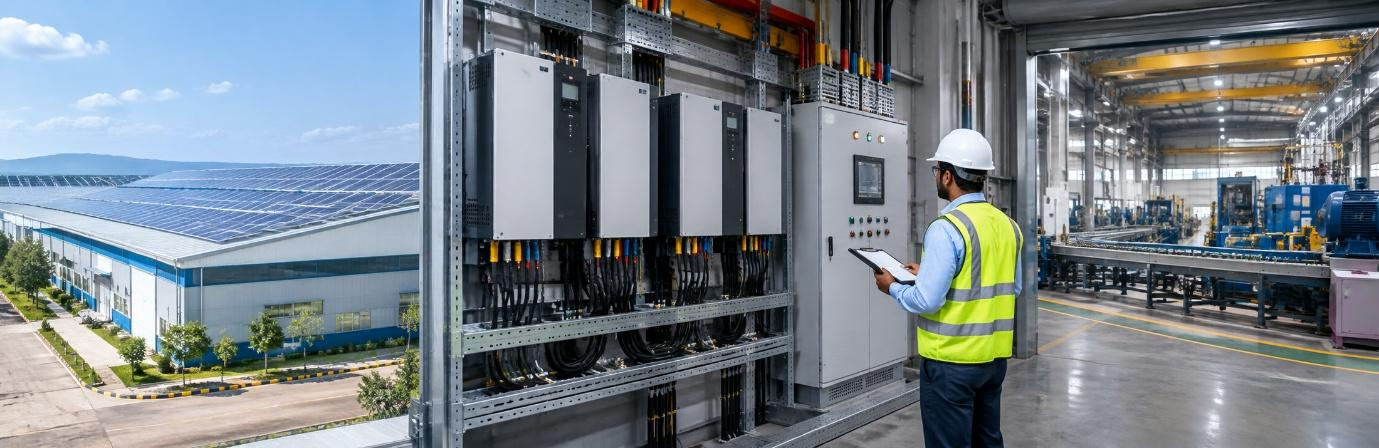
A low-cost inverter may look attractive at the time of purchase, but the right choice should be based on more than efficiency and wattage. For a serious commercial or utility-scale project, the inverter should be assessed for:
- Reactive-power capability
- Grid-code compliance
- Voltage and frequency response
- Harmonic and flicker performance
- Ride-through functionality
- Monitoring and remote-control capability
- Protection coordination
- Warranty and local service support
- Compatibility with plant-control systems
For commercial and industrial users, these features can affect project approvals, plant availability, equipment protection, and long-term operational value.
The practical takeaway
Solar inverters are becoming active participants in the electricity system. They convert solar energy, but they also help manage voltage, support frequency response, maintain power quality, and provide the grid support needed for larger amounts of renewable energy to connect safely.
For homeowners, this means choosing a compliant inverter that meets basic grid and safety standards. For businesses and solar developers, it means evaluating advanced inverter functions such as reactive power control, voltage ride-through, and monitoring as part of the project's technical design.
As India adds more solar capacity, the quality of inverter technology will play an increasingly important role in keeping the grid stable, reliable, and ready for a cleaner energy future.