
Best Hybrid Inverter in India (2026): How to Choose One You Can Rely On
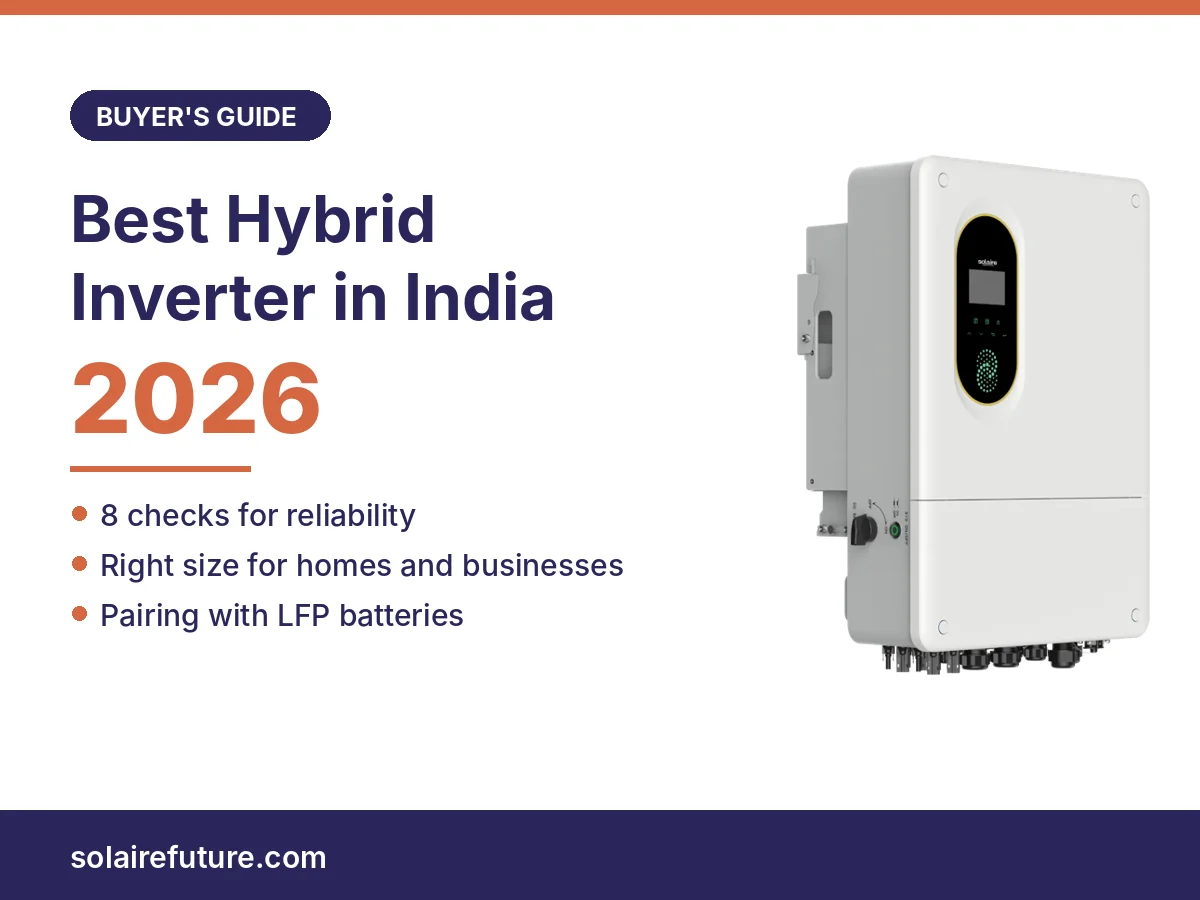
In short: The best hybrid inverter for an Indian home or business is a BIS certified model that switches to battery backup in a few milliseconds, accepts enough solar panels for the roof, works with LFP batteries, is rated IP65 for outdoor use, has Type II surge protection on both the DC and AC sides, and is installed and serviced by a local authorised partner. Most homes need a single-phase 3 to 5 kW model; larger homes, offices and light commercial sites on a three-phase connection need 8 to 20 kW.
Buyer’s guide • Updated
A hybrid solar inverter manages solar panels, a battery and the grid together, so it cuts your bill during the day and keeps power on during a cut.
Solaire makes hybrid inverters and batteries. This guide sets out the checks we would ask any buyer to apply to any brand, using figures you can find on any datasheet, and shows the published datasheet figures for our own models so you can compare like for like.
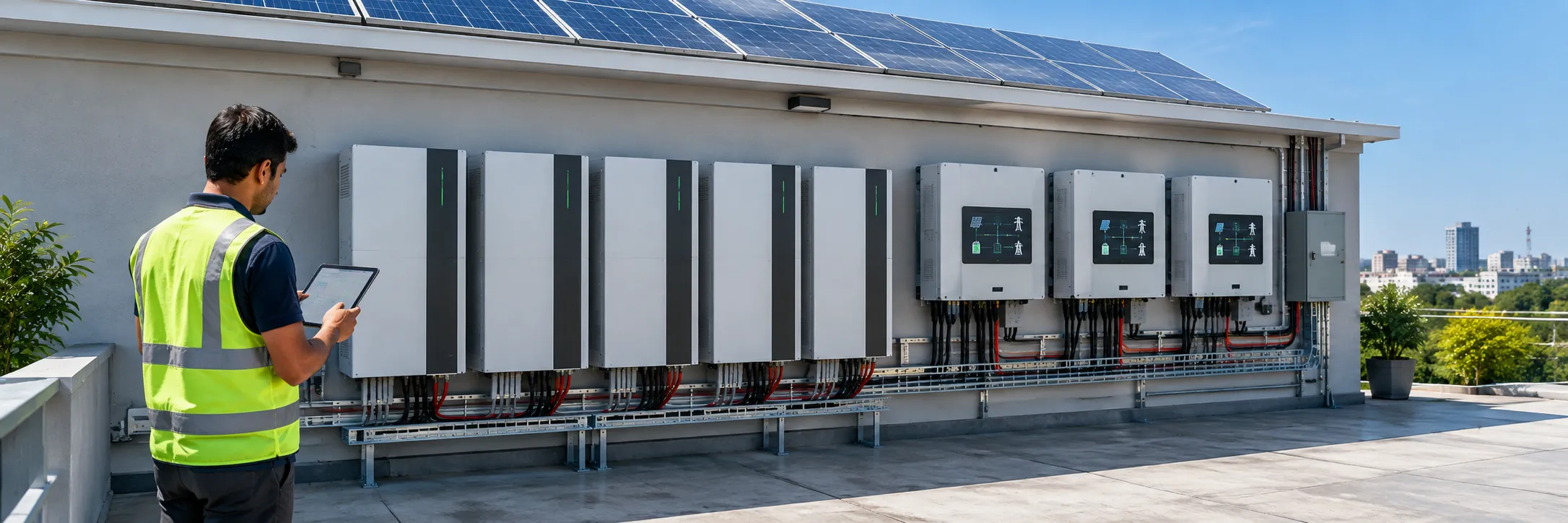
How a Hybrid Inverter Works
8 checks for a reliable hybrid inverter
1. Certification
Look for: BIS certification for the exact model, plus IEC 62109-1/-2 (safety) and IEC 61727 / IEC 62116 (grid connection and anti-islanding).
Why check it: Certification is the first filter for a grid-connected inverter in India. Ask for the BIS registration of the model you are being sold, not just the brand.
2. Backup switchover time
Look for: Published in milliseconds (ms) on the datasheet.
Why check it: The faster the switch to battery in a power cut, the less likely lights, routers and computers are to flicker or reset.
3. Solar input (PV oversizing and MPPT current)
Look for: Maximum recommended PV array (Wp), number of MPPTs and maximum input current per MPPT.
Why check it: Modern high-wattage panels carry higher currents. If the input current per MPPT is lower than the panel string supplies, some energy is lost.
4. Battery compatibility
Look for: Battery voltage range, support for LFP (lithium iron phosphate) and lead-acid, and battery communication (CAN or RS485).
Why check it: The inverter and battery must talk to each other for safe charging. Your installer should confirm the exact pairing.
5. Protection for Indian conditions
Look for: IP65 enclosure, Type II surge protection (SPD) on both DC and AC sides, operating temperature range.
Why check it: Dust, monsoon rain, heat and voltage surges are everyday conditions an inverter has to survive in India.
6. Backup power and surge capacity
Look for: Rated backup (EPS) output and short-term peak output.
Why check it: Motors, pumps and air conditioners draw a high starting current. A higher peak rating starts them without tripping.
7. Room to grow
Look for: Parallel operation of several inverters and expandable battery modules.
Why check it: Homes and businesses add load over time: an extra AC, an EV charger, a second floor. An expandable system avoids replacing the inverter.
8. Warranty and service path
Look for: Warranty term in writing, who registers it, and who you call for service.
Why check it: Warranty claims are raised by the local partner who supplied the system, so ask who services systems in your district.
How the Solaire hybrid range measures up
Figures from the published Solaire datasheets. Compare them with the same lines on any other datasheet.
| Specification | SH-GEN.S-LV (single phase) | SH-GEN.X-LV (three phase) |
|---|---|---|
| Ratings | 3 and 5 kW | 8, 10, 12, 15 and 20 kW |
| Backup switchover | Under 4 ms | Under 3 ms |
| Solar input | Up to 200% PV oversizing; 2 MPPTs; 16 A per MPPT | Up to 200% PV oversizing (16 to 40 kWp); 2 MPPTs; 18 A per MPPT (8 kW), 36 A per MPPT (10 to 20 kW) |
| Battery | Lithium (LFP) or lead-acid, 40 to 60 V; CAN and RS485 | Lithium (LFP) or lead-acid, 40 to 60 V; CAN and RS485 |
| Backup peak output | 200% of rated power for 10 s | 2 times rated power for 10 s |
| Efficiency | Max 97.6%; European 97.0% | Max 97.6%; European 97.0% |
| Protection | IP65; Type II SPD on DC and AC; -25 to 60 °C | IP65; Type II SPD on DC and AC; -25 to 60 °C |
| Parallel units | Up to 3 | Up to 10 |
| Certification | BIS; IEC 61727, IEC 62116, EN/IEC 62109-1/-2 | BIS; IEC 61727, IEC 62116, EN IEC 62109-1/-2 |
| Warranty | Up to 10 years | Up to 10 years |
Which hybrid setup fits your home or business
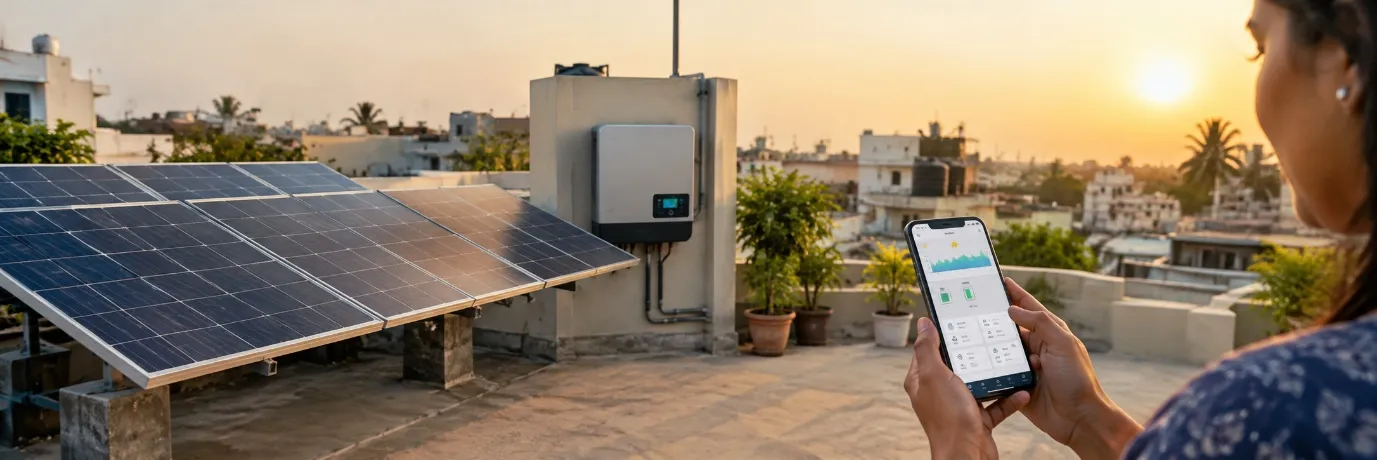
1. Homes that want backup in a power cut
Need: Keeping lights, fans, Wi-Fi, a refrigerator and a TV running through outages.
Suggested setup: A single-phase SH-GEN.S-LV at 3 or 5 kW with one or more TB-LD51 LFP batteries. Backup switches over in under 4 ms.
2. Larger homes and homes planning more load
Need: Several air conditioners, smart-home devices, or plans to add an EV charger or more panels later.
Suggested setup: The SH-GEN.S-LV at 5 kW on a single-phase connection, or the SH-GEN.X-LV if the home has a three-phase connection. Size the battery bank for the load you expect in two or three years.
3. Clinics, small offices and home businesses
Need: Spaces where even a brief outage interrupts work, billing or equipment.
Suggested setup: On a three-phase connection, the SH-GEN.X-LV at 8 or 10 kW, which switches to backup in under 3 ms. On single phase, the SH-GEN.S-LV at 5 kW. Pair either with TB-LD51 batteries sized for the hours of backup you need.
4. Large homes, workshops and light commercial sites
Need: Multiple air conditioners, motors and pumps running at the same time.
Suggested setup: The SH-GEN.X-LV at 10 to 20 kW. Its backup output can deliver twice its rated power for 10 seconds, which helps start motors and compressors, and it supports up to 36 A per MPPT for high-wattage panels.
5. Commercial and multi-unit buildings
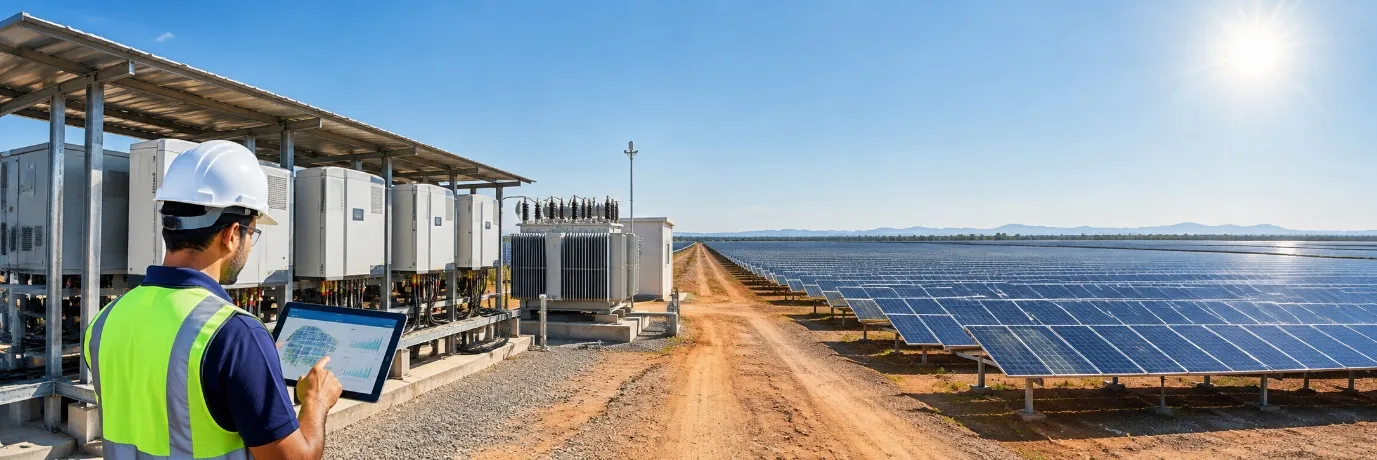
Need: Schools, hotels, small factories and large rooftops that need more than one inverter.
Suggested setup: Up to 10 SH-GEN.X-LV units can run in parallel. For larger storage, the ESS-TRENE is a 100 kW / 215 kWh commercial battery energy storage system.
Why LFP batteries suit hybrid systems
LFP (lithium iron phosphate) is the battery chemistry most widely used for stationary solar storage because it is thermally stable and lasts for thousands of cycles. The Solaire TB-LD51 is a 51.2 V LFP battery with 5.12 kWh nominal and 4.6 kWh usable energy (90% depth of discharge), rated for more than 6,000 cycles at 90% depth of discharge to 70% of original capacity at 25 °C. Up to 16 units can be combined (81.92 kWh). It is BIS certified, rated IP40 for indoor installation, and carries a warranty of up to 10 years.
For a deeper look at storage, read battery energy storage systems (BESS) and hybrid inverters explained.
Questions to ask before you buy
- Is this exact model BIS certified? Can I see the registration?
- What is the switchover time, and which of my loads will run on backup?
- How many panels can this inverter take, and what is the input current per MPPT?
- Which battery is it paired with, and do the two communicate over CAN or RS485?
- Is there Type II surge protection on both the DC and AC sides?
- Can I add batteries or a second inverter later?
- What is the warranty term, who registers it, and who services the system in my area?
Buying and service
Solaire systems are sold, installed and serviced through authorised Solaire partners (EPCs and distributors). Your installer registers the warranty, and the partner who supplied your system raises any service or warranty claim with Solaire. To find a partner or ask a question, call 1800 8338 666 or contact Solaire.
Frequently asked questions
What is a hybrid solar inverter?
A hybrid inverter connects solar panels, a battery and the grid. It powers your loads from solar first, stores surplus solar in the battery, exchanges power with the grid, and switches to the battery when the grid fails.
Which is the best hybrid inverter for a home in India?
The best choice is the one that passes all eight checks in this guide and matches your connection and load. For a single-phase home, look for a BIS certified 3 to 5 kW model with a switchover of a few milliseconds, 200% PV oversizing, LFP battery support, IP65 and Type II surge protection on DC and AC, backed by a local installer. The Solaire SH-GEN.S-LV meets each of the datasheet checks.
Should I choose a hybrid or an on-grid inverter?
Choose an on-grid inverter if your main goal is a lower bill and power cuts are rare. Choose a hybrid inverter if you need backup during power cuts or want to store solar for the evening. See hybrid inverter vs on-grid inverter.
Which battery is best with a hybrid inverter?
For most homes and businesses, an LFP (lithium iron phosphate) battery. LFP is thermally stable and long-lasting: the Solaire TB-LD51 is rated for more than 6,000 cycles at 90% depth of discharge. Your installer confirms that the battery and inverter are compatible.
How long will a battery back up my home?
Divide the battery’s usable energy by your load. One TB-LD51 stores 4.6 kWh of usable energy, so a 500 W load runs for roughly 9 hours before conversion losses. Add modules for longer backup; up to 16 can be combined.
What size hybrid inverter do I need?
Add up the loads you want to run at the same time and size the inverter above that. As a rule of thumb, most homes need 3 to 5 kW on single phase; larger homes, offices and shops need 8 to 20 kW, usually on three phase. Your installer should confirm the size from your bills and a site visit.
Can I expand a hybrid system later?
Yes, if you plan for it. The SH-GEN.S-LV runs up to 3 units in parallel and the SH-GEN.X-LV up to 10, and TB-LD51 batteries expand up to 16 units.
Can a hybrid inverter be used under PM Surya Ghar?
Yes, for homes. The SH-GEN.S-LV and SH-GEN.X-LV can be used in home rooftop solar systems installed under PM Surya Ghar: Muft Bijli Yojana. Applications are made on the official PM Surya Ghar portal, and subsidy eligibility follows the scheme rules.
What warranty do Solaire hybrid inverters carry?
Solaire hybrid inverters and TB-LD51 batteries carry a warranty of up to 10 years. Your installer registers the warranty, and the authorised Solaire partner who supplied your system raises any claim with Solaire.
Related reading
- Hybrid inverter vs on-grid inverter
- Hybrid solar inverters in India
- Solaire hybrid inverters
- Solaire LFP solar batteries
Sources: Solaire SH-GEN.S-LV, SH-GEN.X-LV and TB-LD51 datasheets (see the downloads on each product page).